


Germany’s Opportunity Card can give eligible African professionals time in Germany to look for qualified work without first securing a job offer. The decision should begin with your qualifications, language evidence and funding: a successful visa application does not guarantee an employer will hire you.
This guide explains the two eligibility routes, the 2026 financial benchmark, permitted work and a practical application plan for professionals from Tanzania and across Africa. Your nationality and place of residence determine the relevant consular process; there is no separate fast-track card for African applicants.
Start by identifying your target role on the JobsTanzania job board, then compare its requirements with your experience before spending money on migration preparations. You can also apply to German employers from home and consider a work visa once you have a qualifying offer.
Who can qualify for the Opportunity Card
Route one for recognised skilled workers
The official Opportunity Card guidance provides a route for people with a German qualification or a foreign qualification fully recognised in Germany. Eligible skilled workers do not need to score six points, and language proof is not required for this route. German remains useful for interviews, workplace communication and everyday life.
Route two through the points system
Applicants using the points route need an eligible qualification recognised by the country where it was obtained, German at A1 or English at B2, and at least six points. Non-academic vocational training normally must have lasted at least two years. Points cannot replace these basic conditions. Check the official qualification and language FAQ before choosing evidence or booking a test.
Points may come from partial recognition, professional experience, German proficiency, advanced English, age, a qualifying previous German stay, a shortage occupation or an eligible spouse or partner. Do not assume every engineering qualification receives a shortage point. Use the official self-check and retain documents supporting each claim.
A realistic points example
Consider a 32-year-old applicant with an eligible degree, three years of relevant experience within the past five years, B1 German and sufficient funding. The age category contributes two points, the experience category two and B1 German two: six in total. This is an illustration, not an eligibility decision. The qualification, language and funding conditions still need evidence.
What the card allows
The initial search period can be up to one year. Under section 20a of Germany’s Residence Act, secondary employment is limited to an average of 20 hours a week across all employers. Qualifying trial employment may last up to two weeks per employer. Ordinary full-time employment requires the appropriate subsequent permission; read the conditions on your residence document.
An engineer, nurse or other regulated professional must also check recognition and licensing requirements for the occupation. Permission to enter for a job search does not itself authorise professional practice. The Recognition in Germany portal helps identify the responsible authority.
Budget and prepare before you apply
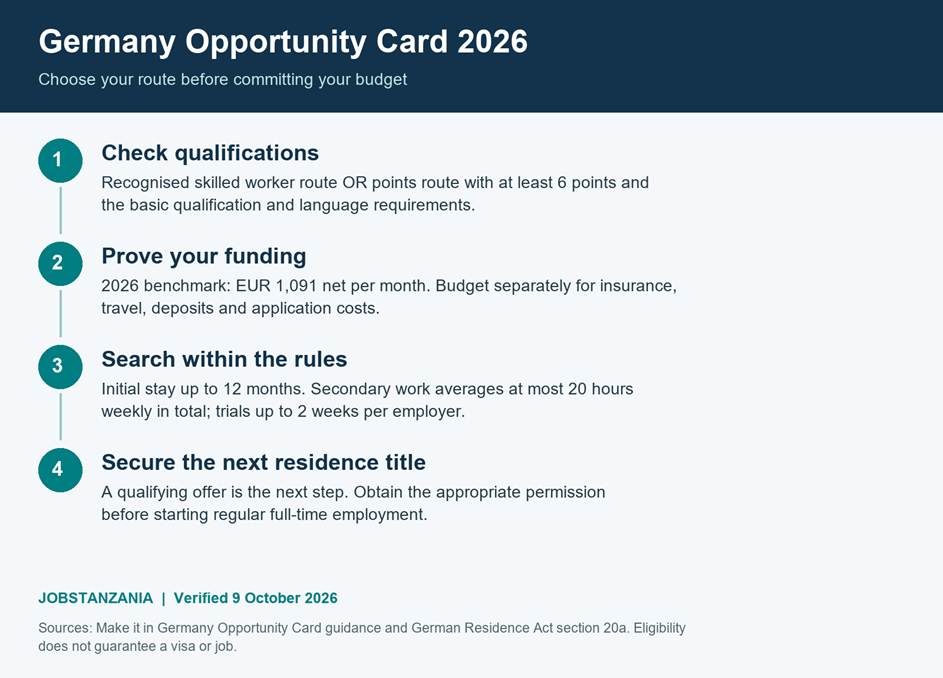
Figure 1 Germany Opportunity Card planning route. The visa and funding conditions must be checked together.
The 2026 official funding benchmark is EUR 1,091 net per month. For 12 months, that is EUR 13,092 by calculation. A blocked account or a formal declaration of commitment can demonstrate funding; an accepted part-time contract may cover all or part of the requirement. The official funding FAQ explains how a salary shortfall can be covered. Do not budget on the assumption that you will find a job immediately.
Add travel, insurance, document translation, qualification checks, visa charges, temporary accommodation and a rental deposit to your plan. The monthly immigration benchmark is not a promise that living costs in your chosen city will fit that amount. Keep a return-travel reserve and decide in advance how long you can fund an unsuccessful search.
Prepare your passport, qualification evidence, recognition or comparability documents, language proof where applicable, financing evidence, health insurance and supporting employment records. Check the competent mission’s checklist for translations and additional documents. Begin through the Federal Foreign Office Consular Services Portal or follow the responsible mission’s instructions if online application is unavailable locally.
Build a job search that employers can evaluate
Choose a role before choosing a city
List ten employers whose work matches your skills and record their required language level, qualifications, location and application process. A software professional might prioritise a portfolio and relevant technology experience; a healthcare applicant needs an early licensing plan; a maintenance specialist should document equipment, responsibilities and safety training. These are search strategies, not claims that vacancies or sponsorship are available.
Use the official German job listings and employer career pages to understand actual requirements. Search from home first, ask whether English is sufficient and check whether recognition is required before employment. The official guide to finding a job provides application guidance.
Prepare evidence rather than a generic CV
Keep a master CV with accurate dates, role scope, qualifications and referees. For each application, select achievements relevant to the vacancy and explain the scale of the work. State your actual residence and work-permission status. Use measurable results only when you can support them, and remove confidential employer information from work samples.
For a practical preparation method, read Your CV Is Career Capital. Then scan your CV against the target advert to identify wording and evidence gaps. The scanner’s result is a preparation aid, not an employer decision or visa assessment.
A four week preparation plan
Week one: confirm your qualification route, target occupation and consular checklist. Week two: gather references and language evidence, prepare a budget and investigate recognition. Week three: tailor applications, practise interviews and contact employers. Week four: review responses and your funding decision before submitting a visa application. This is an editorial planning schedule; qualification checks and appointments can take longer.
Plan the transition after an offer
Once a qualifying offer arrives, contact the competent foreigners authority about the appropriate employment residence title. The official employer guidance explains the switch. A conditional Opportunity Card extension may be possible in particular cases, but it is not an automatic extra two years of job searching. Ask for confirmation of your permitted start date.
Frequently asked questions
Do I need a job offer before applying
No. The Opportunity Card is designed for an eligible job search without a prior qualified job offer. If you already have a suitable offer, compare the relevant work-visa route instead.
Can Tanzanian and other African citizens apply
Eligible non-EU and non-EFTA applicants can use the scheme. Your passport, qualifications, financing and other requirements determine eligibility. Apply through the mission responsible for your place of residence.
Is IELTS always required
No. Recognised skilled workers do not need language proof for the card. The points route requires German A1 or English B2 evidence. English-medium education should not be assumed to exempt you; check accepted proof with the mission.
Can I take any full time job immediately
No. The initial search card has secondary-work and trial-work limits. A regular full-time position requires the relevant employment permission. A job offer alone does not remove the restrictions.
Can my spouse travel with me automatically
No. The official family FAQ says a spouse generally needs their own residence title during the search period. A spouse who independently qualifies may apply for their own card. Rules for children have separate conditions.
What happens if I do not find qualified work
Do not assume an automatic extension. Track the expiry date, consult the foreigners authority about any lawful alternative and plan departure if you have no permission to remain.
Does JobsTanzania provide the visa
No. Immigration authorities decide applications. JobsTanzania career tools can help organise your search and CV; they do not guarantee a visa, interview or employment.
For qualification, funding and family details, consult the official Opportunity Card FAQ and the responsible German mission before applying.
Take the next step with a stronger application
Choose one real vacancy and run your free CV match review. If you need help presenting your verified experience, view JobsTanzania CV and LinkedIn services and confirm the scope for your target country before ordering. Keep following the JobsTanzania International Opportunities while you prepare. Paid support is optional and does not influence visa decisions.
This article provides general career and immigration information checked on 9 October 2026. Requirements and mission procedures can change; the current official rules and your individual circumstances govern your application.