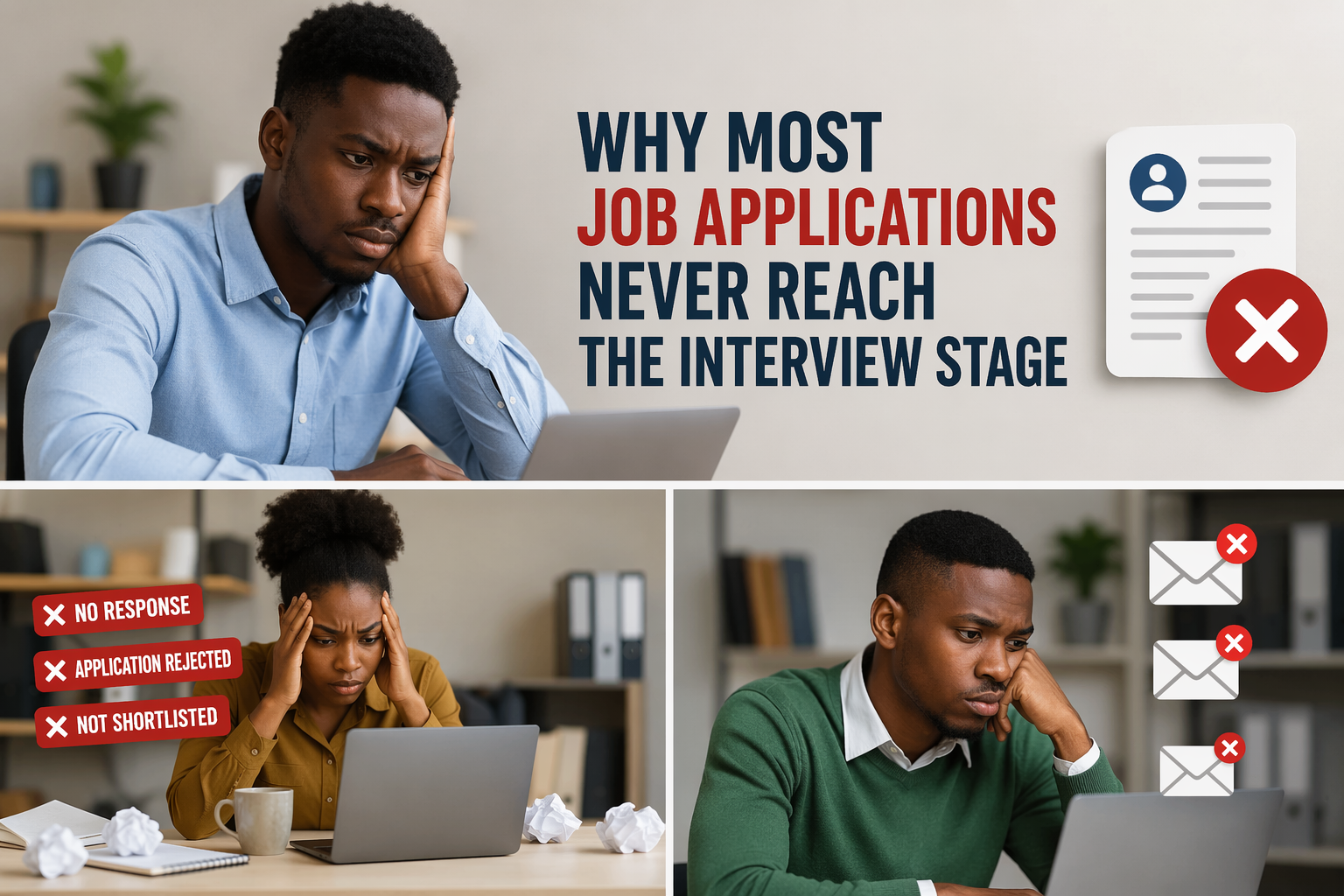
Have you applied for many jobs but never received a call for an interview? If so, you are not alone.
Many job seekers in Tanzania send dozens of applications every month but receive little or no response from employers. This can be frustrating and discouraging, especially when you believe you have the right qualifications.
The good news is that there are common reasons why applications are rejected before reaching the interview stage. Understanding these reasons can help you improve your chances of getting noticed by employers.
1. Your CV Does Not Match the Job Requirements
One of the biggest reasons a CV gets rejected is because it does not clearly show that the candidate meets the job requirements.
Many job seekers use the same CV for every position they apply for. However, employers are looking for candidates whose skills and experience match the specific role they are hiring for.
Before applying, carefully read the job description and ensure your CV highlights the skills, qualifications, and experience relevant to the position. And most importantly, you follow this guide on how to write a winning CV in Tanzania in 2026.
2. Employers Receive Too Many Applications
Popular vacancies often attract hundreds of applicants within a few days.
When employers receive a large number of applications, they usually spend only a short time reviewing each CV. If your CV does not quickly show why you are a good fit, it may be overlooked.
This is why it is important to have a clear, professional, and well-organized CV.
3. Your CV Is Not ATS-Friendly
Many employers now use Applicant Tracking Systems (ATS) to help manage applications.
An ATS scans CVs before they reach the hiring manager. If your CV is poorly formatted or missing important keywords related to the job, it may be filtered out automatically.
This means that even qualified candidates can be rejected before a human recruiter sees their application.
Employers are increasingly using technology to speed up recruitment and identify qualified candidates faster.
4. You Apply After the Deadline
Some job seekers wait too long before submitting their applications.
In many cases, employers begin reviewing applications as soon as they receive them. If they find suitable candidates early, they may close the recruitment process before the official deadline.
Applying early gives you a better chance of being considered.
5. Your Application Is Incomplete
Employers often reject applications that are missing important information.
Common mistakes include:
- Missing contact details
- Missing educational information
- Missing work experience
- Not attaching the required documents
- Leaving sections incomplete
Before submitting any application, double-check everything to make sure all required information is included.
6. Your Email Looks Unprofessional
If you are applying by email, first impressions matter.
Using email addresses such as "coolboy123@gmail.com" or "princesslove99@yahoo.com" may appear unprofessional.
Instead, use a simple email address that includes your real name.
For example:
Professional communication helps employers take your application seriously.
7. You Do Not Follow Application Instructions
Many employers include specific instructions in job advertisements.
For example, they may ask candidates to:
- Include a reference number
- Attach a cover letter
- Submit documents in PDF format
- Answer screening questions
Ignoring these instructions can result in automatic rejection.
Always read the job advertisement carefully before applying.
8. Your Skills Need Improvement
Sometimes employers do not respond because other candidates have stronger skills or more relevant experience.
This does not mean you should stop applying. Instead, focus on improving your qualifications through training, certifications, internships, volunteering, and practical experience.
Every new skill increases your chances of standing out from other applicants.
What Employers Are Looking For
Employers want candidates who:
- Meet the job requirements
- Have a professional CV
- Follow instructions
- Demonstrate relevant skills
- Apply on time
- Present themselves professionally
Recruiters are often under pressure to hire quickly and focus on candidates who clearly match the position.
You can learn more about how employers hire and screen candidates in our articles:
- Why Posting Jobs on JobsTanzania Helps Employers Hire Faster in Tanzania
- How to Hire Faster in Tanzania: A Proven 7-Day Hiring Process
These articles provide useful insights into what employers look for during recruitment.
Final Thoughts
If you are not getting interview invitations, do not assume that employers are ignoring you.
In many cases, small improvements to your CV and application process can make a significant difference.
Take time to customize your CV, apply early, follow instructions carefully, and ensure your application is complete.
Remember, getting hired is often about presenting your qualifications in the best possible way.
Build a Free ATS-Optimized CV Today
Want to improve your chances of getting shortlisted?
Build a professional, ATS-optimized CV right here on our platform. Choose from 3 templates, fill in your details, and download your CV as a PDF, completely free.
Start building your CV today and make your next application stand out.