

HumanValue Consulting Limited | JobsTanzania Career Intelligence | 29 October 2026
Imagine a distributor with 40 vehicles serving Dar es Salaam, Morogoro and Mwanza. Deliveries are late, workshop records are incomplete and managers disagree about which breakdowns could have been prevented. Hiring another technically experienced person will help only if that person can prioritise risk, coordinate maintenance and make the fleet's condition visible.
This employer guide provides an illustrative assessment process for a fleet and safety supervisor. Adapt it to your vehicle classes, routes, operating permissions and existing safety system.
1. Define the work before searching for candidates
Specify the fleet size and type, workshop arrangements, reporting line, shift pattern, travel expectations and authority to stop an unsafe operation. Distinguish the supervisor's responsibilities from those of qualified mechanics, drivers, dispatchers and safety specialists. A single title should not hide several full-time jobs.
Write outcomes that can be checked: a complete maintenance calendar, documented defect escalation, reliable vehicle-availability records and clear incident follow-up. Confirm the role's required qualifications and any driving or technical credentials against actual duties rather than copying another employer's advert.
2. Ground the brief in the employer's safety obligations
Tanzania OSHA's official services guidance describes workplace registration, inspections, risk assessment and other occupational safety requirements. Use that guidance to review your workplace arrangements with the relevant competent people. A recruitment exercise is not a substitute for statutory inspection or a complete compliance audit.
Ask candidates how they would maintain an obligations register: the requirement, responsible person, evidence, expiry or review date and escalation route. Vehicle roadworthiness, operating permissions and workplace obligations need their own checks with the appropriate authorities. Do not treat a candidate's general assurance that “everything is compliant” as sufficient evidence.
3. Run a realistic 45-minute desk exercise
Give every shortlisted candidate the same fictional pack: a vehicle defect report mentioning a brake concern, an overdue service, a delivery commitment, a breakdown invoice and one week of dispatch records. Use synthetic data; do not expose real driver or customer records.
- Allow 10 minutes to identify immediate risks and missing information.
- Allow 15 minutes to prioritise actions and propose a maintenance and replacement-vehicle plan.
- Allow 10 minutes to prepare a short management update with owners and deadlines.
- Use the final 10 minutes to challenge assumptions: what changes if the replacement vehicle is unavailable?
Strong answers put safety first, explain who must inspect or authorise release and document the decision. A candidate should not diagnose or clear a safety-critical defect beyond their competence. Any practical vehicle assessment should take place under appropriate supervision; an interview does not justify operating an unsafe vehicle.
4. Score evidence consistently
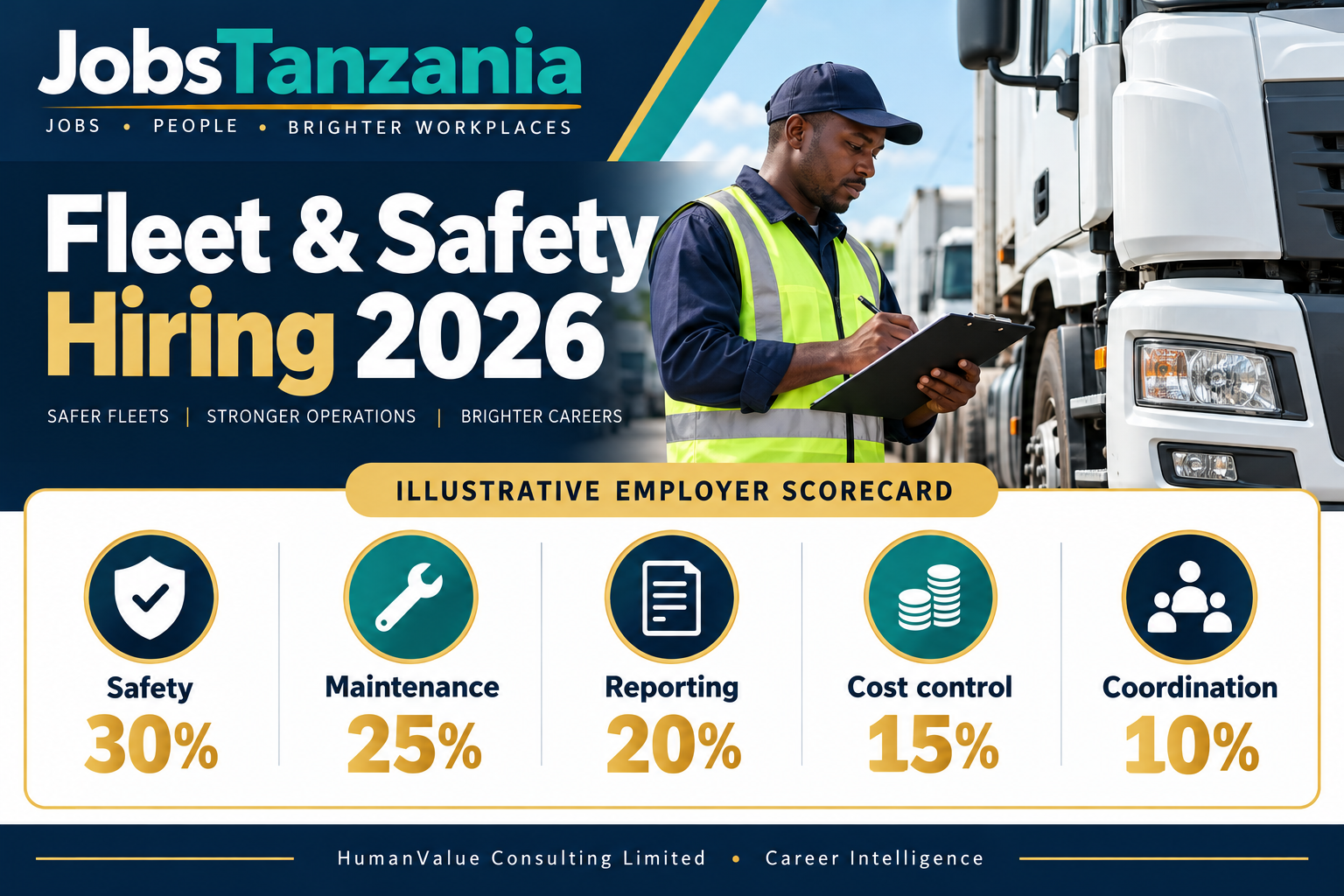
| Competency | Illustrative weight | Evidence to look for |
|---|---|---|
| Safety and compliance judgment | 30% | Risk prioritisation, escalation and release controls |
| Maintenance planning | 25% | Service calendar, resource planning and follow-up |
| Operational reporting | 20% | Accurate definitions and an actionable summary |
| Cost and asset management | 15% | Invoice checks and sensible repair-versus-replace questions |
| Team coordination | 10% | Clear responsibilities and communication |
These weights are a proposed employer tool, not a statutory standard. Have two assessors record evidence independently before discussing scores. Define unacceptable safety responses in advance. A high total should not compensate for an unsafe release decision or fabricated records.
5. Test whether the candidate understands the numbers
Ask for three useful measures and their definitions. For example, vehicle availability could be serviceable vehicles divided by the fleet included in the reporting scope; preventive-maintenance completion could be scheduled jobs completed on time divided by jobs due. Agree the reporting period, exclusions and source records before using either measure.
In an illustrative example, 36 serviceable vehicles out of a 40-vehicle fleet gives 90% availability. That figure is a calculation, not an industry benchmark or a legal target. Pair it with overdue safety-critical defects and repeat breakdowns so that a tidy average cannot hide a serious problem.
6. Verify experience and set a 60-day plan
With the candidate's knowledge, verify employment dates, actual responsibilities and relevant credentials. Ask referees for specific examples of maintenance control, incident escalation and coordination. Our reference-check guide explains how to structure the process fairly. For the driver pipeline, see truck-driver recruitment in Tanzania.
During days 1–15, establish the fleet register and baseline risks. By day 30, review maintenance ownership and reporting quality. By day 60, assess trends against the agreed baseline and resolve gaps with the operations team. Set targets after understanding the fleet's condition and resources.
Ready to recruit? Search transport and engineering profiles in the HumanValue Talent Bank, or request a specialist recruitment brief with your location, vehicle mix and assessment needs. For reporting gaps, explore Excel and dashboard learning in the HumanValue Learning Center. Profile availability does not itself establish verified safety competence.
Official source checked 29 October 2026. The assessment, scorecard and operating example are original editorial tools for employer adaptation.